Underwater
ROVs for aquaculture, hull inspection, and benthic research. Same design surface, different fluid.
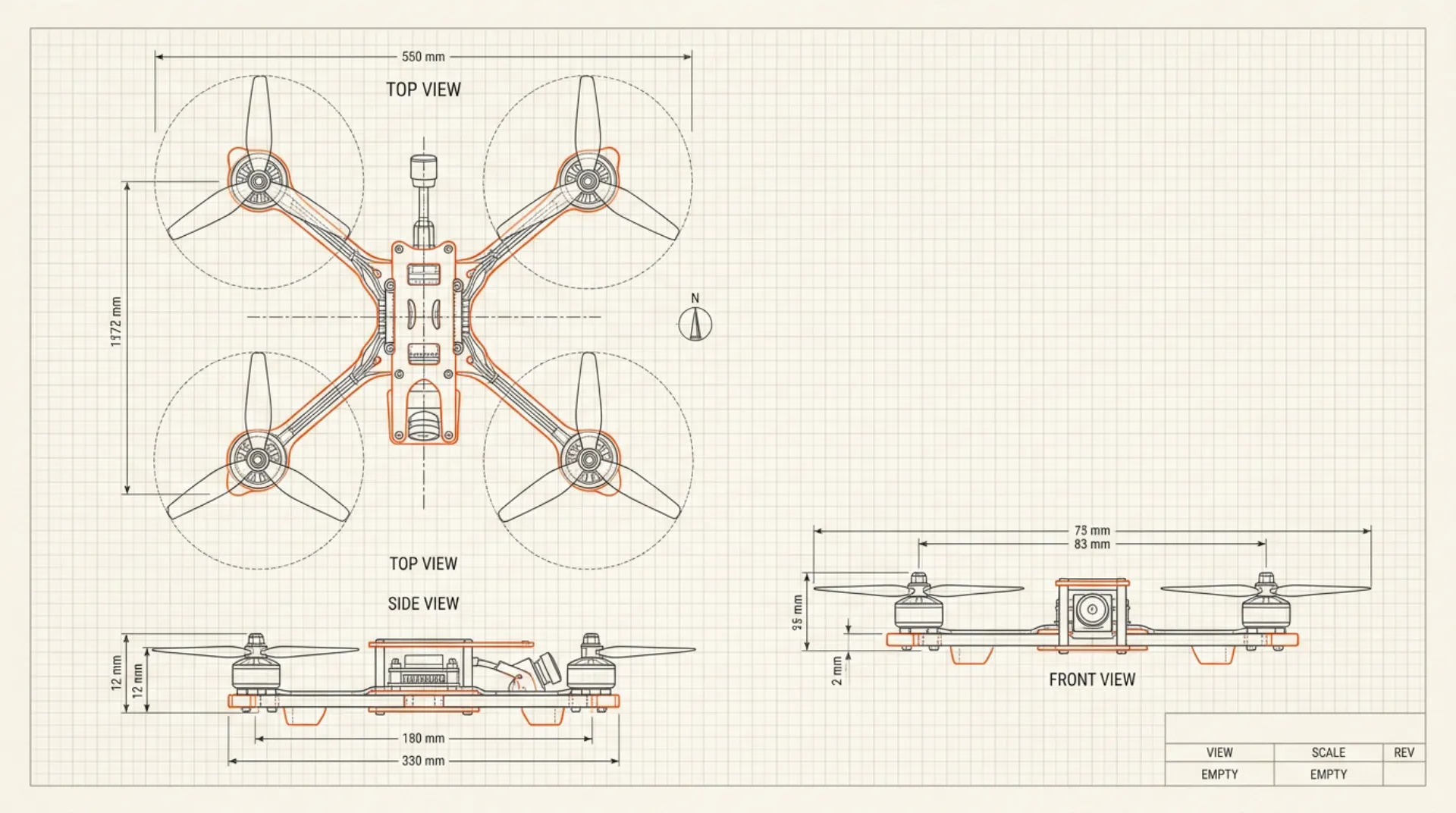
Water is eight hundred times denser than air, so the design problem changes completely, but the discipline stays the same. Four things decide the machine:
Open frames are simple and serviceable for shallow work; enclosed and torpedo hulls suit deeper or faster missions. The target depth drives the hull class and the component ratings.
Thruster count and placement determine whether the ROV can hold station and point precisely in current. DRONA models thruster layout the way it models motor layout in the air.
An ROV should hover in the water column with near-zero effort, so trim and buoyancy are part of the design, not something you fix with tape at the dock.
Camera and lights are the baseline; sonar reads structure when visibility drops to nothing. Payloads are budgeted by weight and power like any other DRONA design.
You describe the job the way you would to an engineer:
"An inspection ROV for marina hulls, 30 m depth, camera, lights, and sonar."
DRONA answers with a complete design: hull, thrusters, battery, control electronics, and the sensor payload, validated for the physics of water, priced from live listings, and rendered in 3D.
Depth is set by the hull class and the pressure rating of every component in it. Describe the target depth and DRONA designs within ratings instead of hoping.
Same design flow, different fluid: thrusters instead of props, buoyancy instead of lift, hulls instead of frames. DRONA treats underwater as a first-class form factor.
Camera and lights are standard; sonar earns its place the moment visibility drops. Every sensor is a weight and power line the design accounts for.
What you describe
DRONA translates a description of the work into a complete, compatible, priced airframe. Validated. Flyable. Yours.