Public safety
SAR-tuned drones with thermal payload, spotlight, and loudspeaker. Designed around your team's SOPs and your region's weather windows.
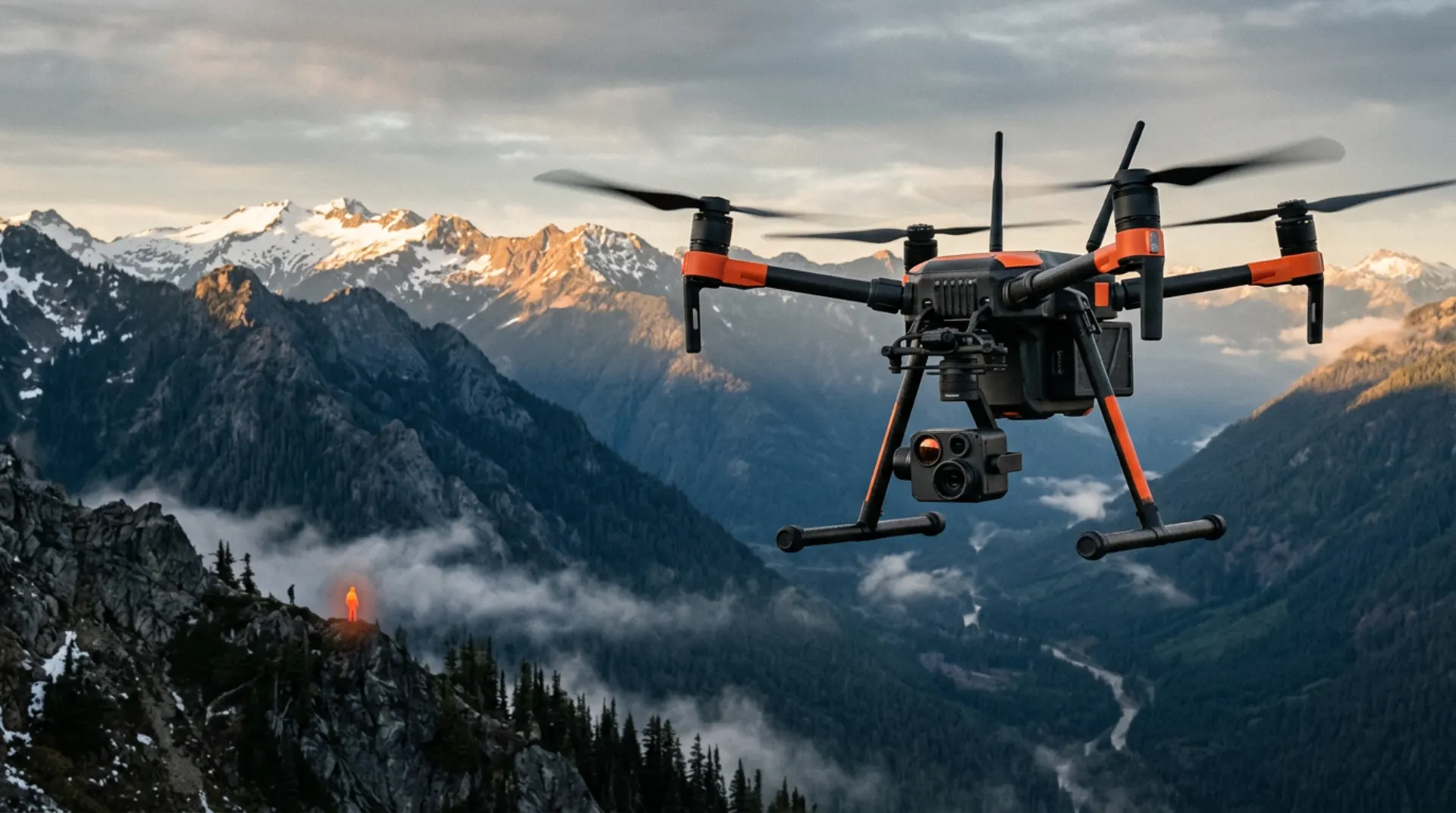
When someone is missing, the aircraft is a sensor carrier with a clock running. Four things decide whether it helps:
A warm person against cool ground is exactly what thermal imaging sees best, at night and under light cover. The thermal camera is the primary payload the airframe is built around.
A spotlight turns a located person into a visible one; a loudspeaker lets the team communicate before reaching them. Both are payload options in the design, and every added gram is budgeted against endurance honestly.
Search patterns eat battery. DRONA sizes endurance against the real all-up weight and shows expected flight time, so the team knows the search radius before launch.
Searches happen in the weather that caused them. Thrust, current, and battery-sag margins are validated so the aircraft flies on the bad night, not just the demo day.
You describe the job the way you would to an engineer:
"A search and rescue drone with thermal camera, spotlight, and speaker, 35-minute endurance."
DRONA answers with a complete design: airframe, motors, battery, flight controller, and the payload set, validated for physics, priced from live listings, and rendered in 3D.
Night is thermal's best case: a warm body against cooled terrain is a strong contrast. Daytime is harder because sun-heated ground competes. Thermal narrows the search; trained eyes confirm.
Yes, if the lift budget is designed for it. Every payload gram costs endurance, so DRONA shows the trade explicitly and validates the margins at full equipment weight.
Wind margins are part of the validation. Rain is a component question: weather-resistant parts help, but sustained heavy rain remains a real limit for most small aircraft. The design tells you its margins honestly.
What you describe
DRONA translates a description of the work into a complete, compatible, priced airframe. Validated. Flyable. Yours.