Film
Cinema payloads, FPV racing, and everything in between. DRONA tunes the airframe to the camera and the shot.
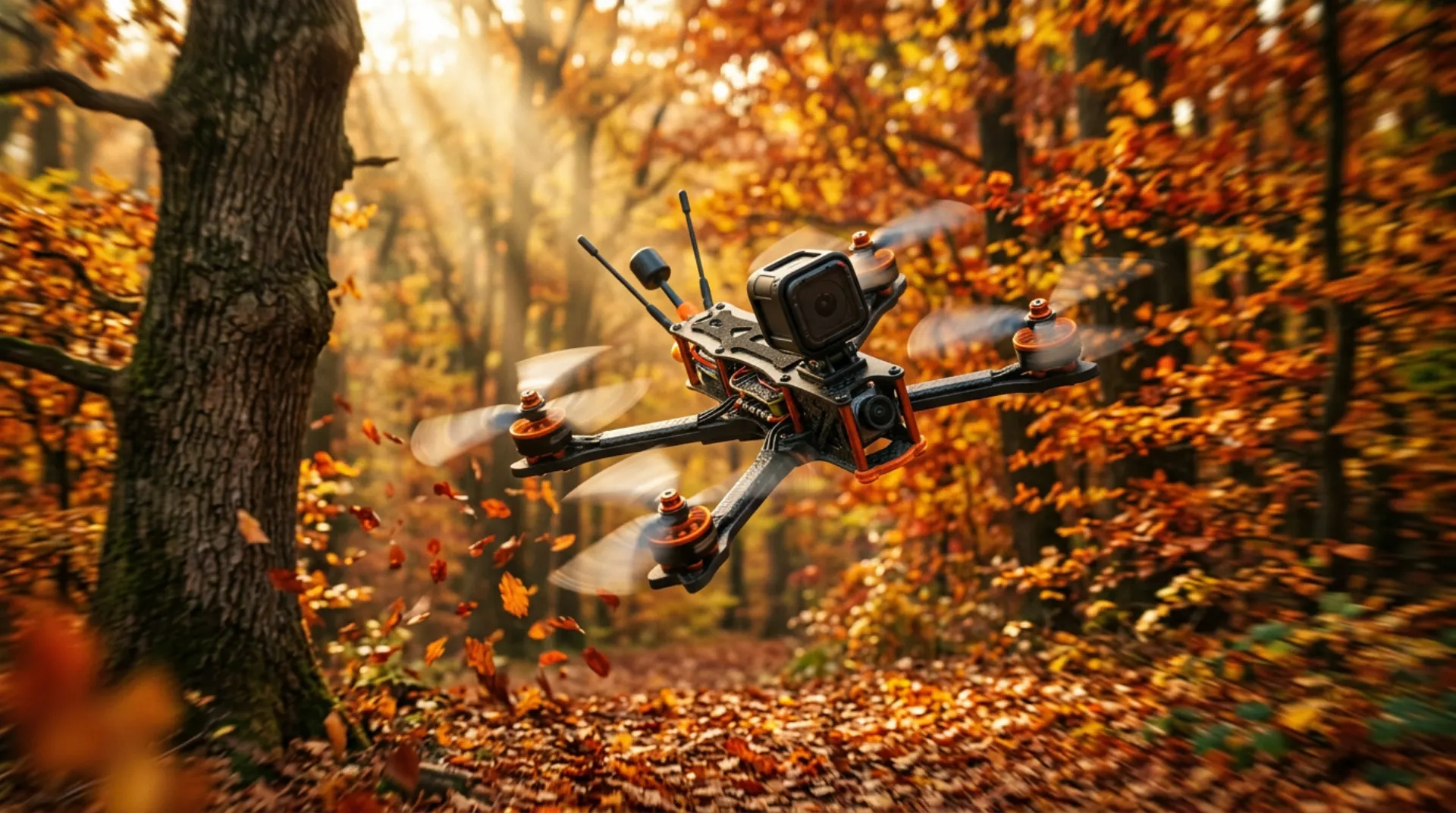
The shot dictates the machine. A locked-off aerial establisher and a one-take chase through a doorway are different aircraft. Four things decide the design:
Cinema work wants a gimbal-stabilized camera; FPV work hard-mounts the camera and makes the movement itself the shot. Either way the camera's weight and size drive the frame, motors, and battery, so DRONA starts from the camera you name.
Bigger frames with lower disc loading ride turbulence more calmly; small ducted cinewhoops fly close to people and through tight spaces. Say what the shot is and DRONA picks the class and proves the margins.
Ducts and prop guards are part of the design, not accessories: DRONA includes printable ducts, mounts, and guards in the build files where the class calls for them.
Set time is expensive. The validated design shows expected flight time per battery so you know how many packs a shooting day needs.
You describe the job the way you would to an engineer:
"A cinewhoop that can fly through a wedding venue with a GoPro, ducted, as quiet as possible."
DRONA answers with a complete design: frame, motors, battery, flight controller, and the camera payload, validated for physics, priced from live listings, and rendered in 3D.
If you can name the camera and its weight, DRONA can size an airframe to lift it with proven margins. Expect a larger multirotor as camera weight grows.
Two grammars: a gimbal gives stabilized, composed cinema frames; FPV makes the camera movement the energy of the shot. DRONA designs either, so describe the footage you want, not the hardware.
The cinewhoop class exists for exactly this: ducted props, small mass, low speeds. The duct and guard parts are included as printable files. Care and local rules still apply to the operator.
What you describe
DRONA translates a description of the work into a complete, compatible, priced airframe. Validated. Flyable. Yours.